
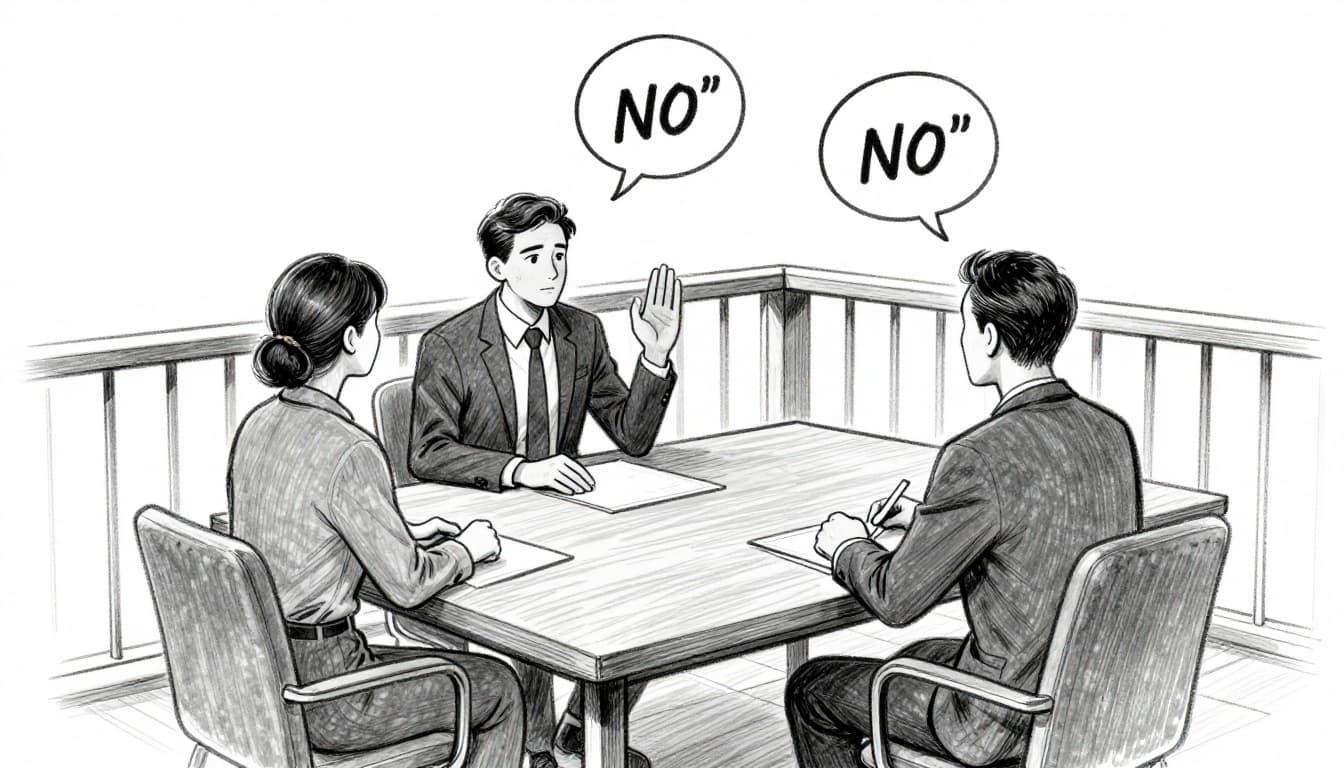
Picture this. You pitch your best offer in a high-stakes meeting. The client leans back, shakes their head, and says, “No, that won’t work.” Your stomach drops. The room feels smaller. But top negotiators don’t crumble. They see that no as a starting point.
Rejection stings in negotiation because it hits our fear of failure. Yet it’s common. Recent business tips show 45% of sales deals fail from friction like slow approvals. The good news? You can turn it around. Handling rejection right builds better deals and stronger ties. This guide shares simple steps. You’ll learn mindset shifts, empathy tools, and smart questions. Plus practice habits for real confidence. These proven tactics work for anyone.
Shift Your Mindset: See Rejection as an Opportunity
Rejection feels personal. It triggers fear. But most times, it’s not about you. Their budget might be tight. Timing could be off. Or hidden issues block the deal. Think of no as a signal to dig deeper.
Psychologists note two types. Logical rejections stem from facts like high price. Emotional ones come from feelings of unfairness. Both open doors if you reframe them. A no invites collaboration. It pushes you to find fit.
Top negotiators use the “go to the balcony” technique. Step back mentally. Breathe deep. Calm your self-talk. View the big picture from above. This clears emotion. You spot paths forward.
Your BATNA helps too. That’s your best alternative to a negotiated agreement. Know it boosts confidence. You won’t chase bad deals. For more on BATNA power, check Harvard’s advice on knowing your BATNA.
Spot the Real Reasons Behind Their No
Start by naming causes. Price worries top the list. Trust gaps follow. Timelines often mismatch. Watch non-verbal cues. Crossed arms signal hesitation. Frowns hint at doubt.
Ask gentle probes. “What concerns you most?” This uncovers truth without pressure. Logical nos fix with data. Emotional ones need rapport. Recent studies urge seeing rejection as feedback. It reveals weak spots in your pitch.
Differentiate fast. High price? Show value. Feels unfair? Validate their view. This builds on your calm mindset. You turn roadblocks into adjustments.
Quick Calm Techniques to Regain Control
Pause first. Count to five. Breathe in for four, out for four. This stops rash words. Silence your critic. Swap “I failed” for “What’s next?”
Build emotional smarts. Stay present. Avoid desperation vibes. Practice daily. Over time, you regain control quick. Long-term, it grows resilience. Early 2026 tips stress thick skin. Network despite nos. It pays off.
Use Empathy and Questions to Turn No into Yes
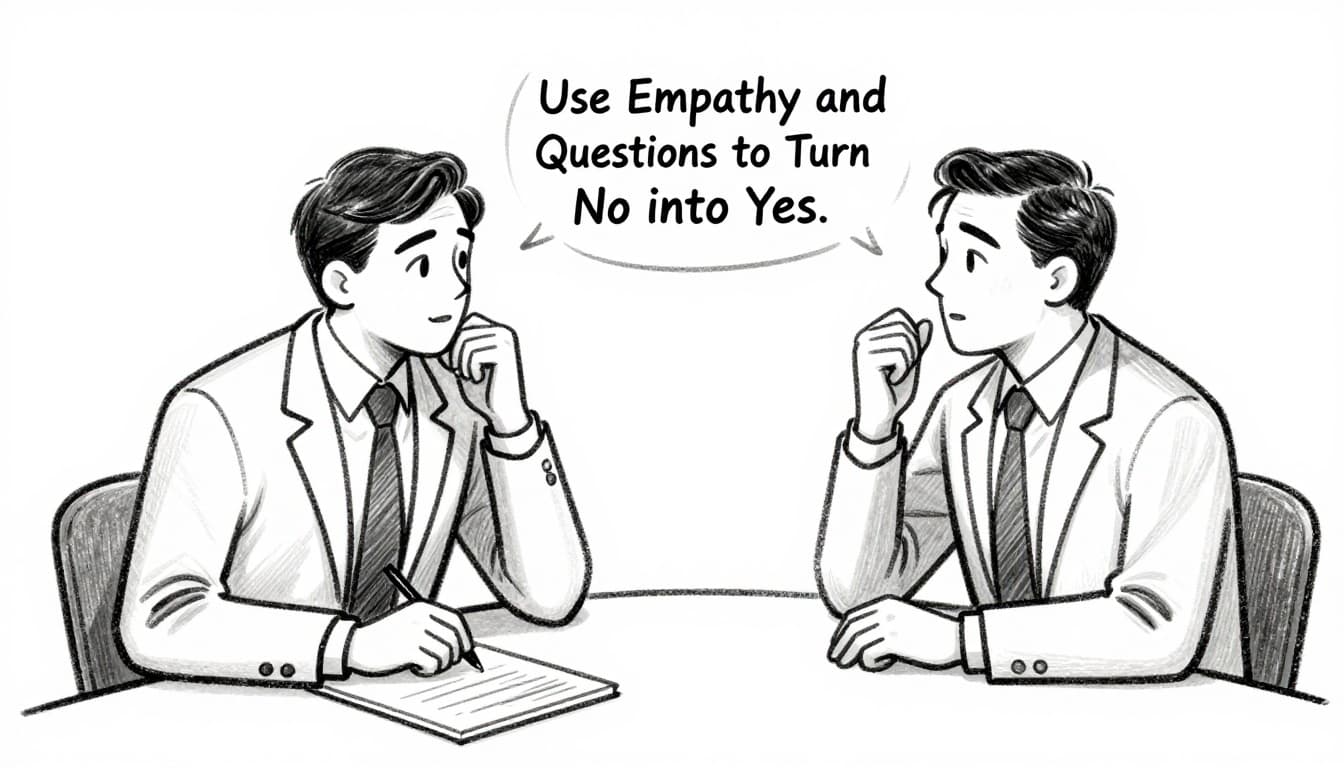
Empathy flips the script. Show you get their side. This lowers walls. Tactical empathy labels feelings. “It sounds like costs worry you.” They nod. Tension eases.
Mirror their words. Repeat the last three. “Budget tight?” They expand. It builds trust fast. List accusations first. “You think I’m pushing too hard.” Clear the air. Then collaborate.
Calibrated questions spark ideas. Use “how” or “what.” “How can we make this fit?” They solve with you. Stay silent after. Let them fill space. Offer a golden bridge. Face-saving options like phased payments.
Chris Voss, ex-FBI hostage pro, nails this. In one renewal meeting, labeling led to rebates. See tips on handling no from Scotwork.
Label Emotions and Mirror to Build Trust Fast
Label exact. “Seems frustrating.” Why it works? Validates them. Defenses drop. Needs surface. Try accusation audit. “You’re mad I changed terms.” Get it out.
Mirror example: They say, “Too risky.” You say, “Risky?” They explain gaps. Tension turns to talk. Real deal: Sales rep labeled doubt. Client opened up. Deal closed with tweaks.
Ask How and What to Spark Their Solutions
Craft questions smart. “What would make this work?” “How does this align with goals?” “What hurdles remain?” Pause after. They reveal.
More: “How can we adjust terms?” “What if we phase it?” “How much flexibility on delivery?” Build golden bridges. “We can add support if you commit now.” Their ideas stick better.
Silence compels more. Count beats. They fill it. Turns no to yes often.
Avoid Pitfalls and Practice for Negotiation Mastery
Don’t argue. Anger kills rapport. Skip quick concessions. It signals weakness. Probe nos. Ignoring them loses chances. Never negotiate alone. You give ground free.
Unclear proposals flop. Vague terms confuse. Fix with specifics. Voss exited sales gracefully. Bounced back stronger. For bounce-back steps, read HBR on recovering from failed talks.
Practice turns skill. Seek small nos daily. Builds comfort.
Top Mistakes That Kill Deals and How to Dodge Them
Common errors hurt. Here’s how to sidestep:
- Argue the no: Fuels defense. Dodge: Label instead.
- Cut price fast: Undervalues you. Fix: Ask why first.
- Ignore cues: Misses signals. Watch body language.
- Rush response: Sounds desperate. Pause always.
- Skip BATNA: Leaves you stuck. Prep alternatives.
Smart replies save deals. Contrast builds wins.
Daily Habits to Get Comfortable with No
Start low-stakes. Ask coffee discounts. Track outcomes.
Role-play scenarios. Partner says no. Practice empathy.
Prep BATNA routine. List options before talks.

Use SPIN questions. Situation facts. Problems they face. Implications. Needs payoff. Micro-habits: Breathe on nos. Note feedback. 2026 advice: Tactical no preserves ties.
Rejection becomes your edge.
Rejection in negotiation tests you. Shift mindset to see chances. Use empathy and questions to collaborate. Dodge pitfalls with practice. These steps build mastery.
That client no? Now a better offer. Try one tactic next time. Share your win in comments. What no turned yes for you? Master this for career edges. For more, see Negotiations Ninja on getting comfortable with rejection.